When to Take Your Child to an Orthodontist (And the Window Most Parents Miss)
The right age for a child's first orthodontic visit is 7, not 12. Dr. Rajesh explains the window most parents miss and what to look for at home.
Read More


Short answer: a root canal saves a tooth whose inner pulp has become inflamed or infected. The dentist numbs the tooth, removes the damaged pulp, cleans and disinfects the canals, then fills and seals them. A crown usually goes on top. The pain settles and you keep your own tooth instead of having it pulled.
Many people put off a root canal because they expect it to hurt. In practice the toothache before treatment is usually far worse than the treatment itself. This guide explains when a tooth needs one, what happens in the chair, and what to expect afterwards.
Because bacteria or damage have reached the pulp, the soft tissue with nerves and blood vessels inside the tooth. Once the pulp is infected it cannot heal on its own. The common causes are:
The clearest sign is a toothache that keeps coming back or wakes you at night. Other signs include:
Some infected teeth give no pain at all and only show up on an X-ray. Not every toothache means a root canal either: sometimes a deep filling is enough. Our post on whether a toothache always means a root canal goes through the difference. Only an examination and X-ray can tell you for sure.
It is done under local anaesthetic, much like a filling, and most cases are finished in a single visit of 45 to 90 minutes. The steps are:
Front teeth usually have one canal and take less time. Back teeth can have three or four. If there is pus or a lot of swelling, the dentist may spread the treatment over two visits and place medicine inside the tooth between them.
For most people it feels like having a filling. The tooth is numb, so you feel pressure and vibration rather than pain. The tooth may be sore for two or three days afterwards, and ordinary painkillers such as paracetamol or ibuprofen usually handle it. If a tooth is very inflamed it can take a little longer to numb, and the dentist will wait until it is fully numb before starting.
Your own tooth is usually the best tooth you can have. Saving it keeps your bite, your chewing and the bone around the root, and it costs much less than replacing the tooth later.
Sometimes a tooth is too broken or the infection has done too much damage to save. Then removing it and replacing it with a dental implant or a bridge is the better choice. Our guide to root canal or implant compares the two side by side.
At Smile Dental Clinic, root canal treatment is ₹7,500 including X-rays. Most teeth also need a core build-up and a crown, so you get the full figure before anything starts.
| Part of the treatment | Price |
|---|---|
| Consultation with iTero 3D scan and written plan | from ₹500 |
| Root canal treatment with X-rays | ₹7,500 |
| Core build-up | ₹2,000 to ₹3,000 |
| Crown (metal-ceramic to zirconia) | ₹6,000 to ₹25,000 |
| Typical total for one tooth | ₹15,500 to ₹25,000 |
A back tooth nobody sees can do well with a simpler crown; a front tooth often looks better with zirconia. The full breakdown by crown type is in our root canal cost guide.
Most people go back to work the same day. Keep to soft food for the first day, and avoid biting hard on the tooth until the crown is fitted, because a treated tooth is more brittle until it is protected. The tooth usually feels normal within a few days.
With a good seal and a crown, a root-canal-treated tooth can last for many years.
Call if the pain gets worse after the first few days instead of better, if swelling appears or grows, if the temporary filling or crown comes off, or if your bite feels high when you close. These are usually simple to fix when seen early.
Root canal treatment is a routine procedure, but like any treatment it has some risks. A tooth can crack if it is left without a crown for too long. Occasionally an infection returns, for example if a canal was very narrow or curved, and the tooth needs retreatment. Rarely the tooth cannot be saved and has to be removed. Fitting the crown on time and keeping up check-ups lowers these risks.
We treat root canals at both our clinics, in Kondapur (Hyderabad) and Vizag. Your first visit is a ₹500 consultation with an iTero 3D scan (an X-ray, if needed, is ₹200 to ₹500), and you leave with a written plan and the exact price. If a filling will do instead of a root canal, we tell you. Read more about root canal treatment in Kondapur and Vizag, or message us on WhatsApp to book a time.
In most cases, yes. Saving your own tooth keeps your bite, your chewing and the bone around the root, and it costs less than an extraction followed by an implant or bridge. If the tooth is too broken to save, removing and replacing it is the better option, and the dentist will tell you which applies.
Most root canals are done in one visit of 45 to 90 minutes. Front teeth with one canal are quicker than back teeth with three or four. If there is pus or heavy swelling, the treatment may be spread over two visits. The crown is fitted at a separate visit, usually two to three weeks later.
For back teeth, almost always. A treated tooth becomes more brittle, and chewing on it without a crown can crack it beyond repair. Some front teeth with little damage can manage without one; this is decided tooth by tooth.
Yes. Most people go back to work the same day. The numbness wears off in a few hours, and any soreness for the next two or three days is usually handled with ordinary painkillers. Eat soft food for the first day.
The infection does not heal on its own. It can spread into the bone around the root and cause swelling or an abscess, and the tooth may reach a point where it cannot be saved. Treating it early is simpler and costs less.
Root canal treatment is ₹7,500 including X-rays. Core build-up is ₹2,000 to ₹3,000 and a crown ₹6,000 to ₹25,000 depending on the material, so a typical total for one tooth is ₹15,500 to ₹25,000. You get the exact figure in a written plan after the ₹500 consultation.
It can, though it is not common. It is more likely if the crown is delayed, if a new cavity forms, or if a canal was very narrow or curved. Regular check-ups with an X-ray help catch it early, and a retreatment can often still save the tooth.
The right age for a child's first orthodontic visit is 7, not 12. Dr. Rajesh explains the window most parents miss and what to look for at home.
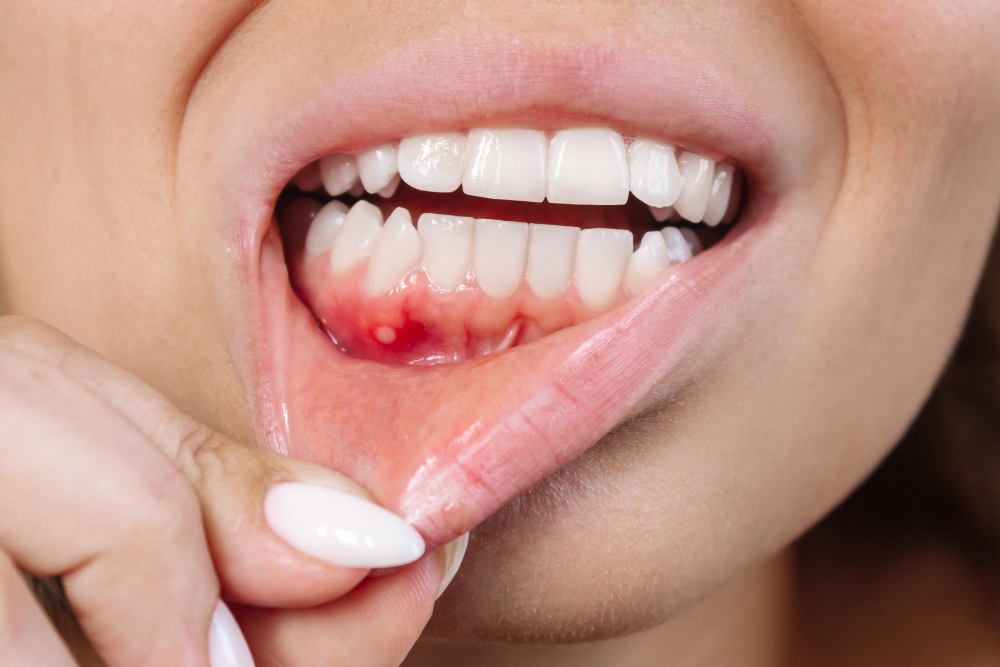
The early signs and four stages of gum disease, what treatment involves at each one, and what it costs in Kondapur and Vizag.