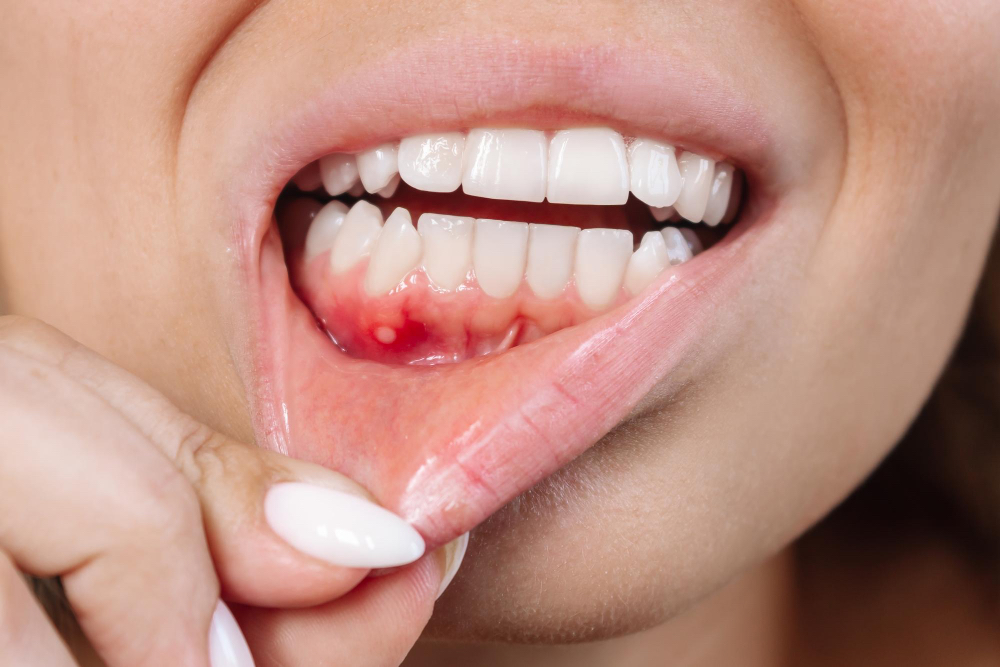
Gum disease affects nearly half of adults over 30, according to the CDC. Most don’t know they have it because early-stage gum disease is painless. By the time it hurts, the damage is harder to reverse. At Smile Dental Kondapur, gum disease treatment starts from ₹2,000 for professional scaling and cleaning. Here’s what gum disease looks like at each stage, what treatment involves, and why catching it early saves both teeth and money.
What Is Gum Disease?
Gum disease (periodontal disease) is a bacterial infection of the tissues that hold your teeth in place. It starts when plaque — a sticky film of bacteria — builds up along and below the gumline. If plaque isn’t removed by brushing and flossing, it hardens into tartar (calculus) that can only be removed by a dentist.
The infection progresses through two main stages, and treatment is different at each one.
Stage 1: Gingivitis (Reversible)
Gingivitis is the early, reversible stage. The gums are inflamed but the bone underneath is still intact. Signs to watch for:
- Bleeding when brushing or flossing — healthy gums don’t bleed from normal brushing pressure
- Red or swollen gums — healthy gums are pink and firm
- Bad breath that doesn’t go away despite good brushing habits
- Gums that look puffy around certain teeth
Gingivitis is fully reversible with professional cleaning and improved home care. Left untreated, it progresses to periodontitis.
Stage 2: Periodontitis (Manageable, Not Fully Reversible)
Periodontitis means the infection has spread below the gumline and started destroying the bone that supports your teeth. Signs include:
- Gums pulling away from teeth (recession) — teeth may look longer than before
- Deep pockets between teeth and gums (measured with a periodontal probe during your checkup)
- Loose or shifting teeth — the bone holding them is weakening
- Pus between teeth and gums
- Pain when chewing
- Changes in how your teeth fit together when you bite
Periodontitis can’t be fully reversed, but it can be managed and stopped from progressing. The earlier it’s caught, the more tooth structure and bone can be preserved.
How Much Does Gum Disease Treatment Cost in Kondapur?
Cost depends on the stage and extent of disease:
Professional cleaning (scaling + polishing): ₹2,000–4,000. This treats gingivitis and is the first line of defense. Recommended every 6 months for prevention.
Deep cleaning (scaling + root planing): ₹4,000–8,000 depending on how many quadrants need treatment. This treats early to moderate periodontitis by cleaning below the gumline and smoothing root surfaces so gums can reattach.
Periodontal maintenance (ongoing): ₹2,000–3,000 every 3–4 months after initial treatment. Periodontitis patients need more frequent cleanings than the standard 6-month schedule.
Surgical treatment (advanced cases): ₹10,000–25,000+ per area. Flap surgery, bone grafting, or guided tissue regeneration for severe bone loss. Not everyone needs this — most cases are caught and managed before surgery becomes necessary.
Read the full pricing and process on our gum disease treatment service page.
What Happens During Gum Disease Treatment?
Step 1: Assessment. We measure pocket depths around every tooth using a periodontal probe. Healthy pockets are 1–3mm. Pockets of 4mm+ indicate disease. X-rays show any bone loss.
Step 2: Scaling and root planing. Using ultrasonic and hand instruments, we remove plaque and tartar from above and below the gumline. Root planing smooths the root surfaces so gums heal against the tooth. This is done under local anesthetic — you’re numb and comfortable.
Step 3: Re-evaluation (4–6 weeks later). We re-measure pocket depths to see how gums have responded. Most patients see significant improvement. If pockets remain deep, we discuss next steps (which may include referral to a periodontist or surgical options).
Step 4: Maintenance. Gum disease is a chronic condition. After treatment, you need professional cleanings every 3–4 months instead of the standard 6 months. This prevents relapse.
The Gum Disease–Body Connection: Why Your Dentist Checks Your Gums
Research links periodontal disease to several systemic health conditions:
Diabetes: Gum disease is more common in people with diabetes, and severe periodontal infection can make blood sugar harder to control. The relationship works both ways — treating gum disease can improve glycemic control.
Cardiovascular disease: Bacteria and inflammatory substances from infected gums enter the bloodstream. Studies associate periodontal disease with increased risk of arterial plaque formation and cardiovascular events. The connection is well-documented in medical literature, though gum disease doesn’t directly cause heart disease.
Pregnancy complications: Pregnant women with gum disease face higher risk of preterm birth and low birth weight. At Smile Dental, we provide pregnancy-safe periodontal screening and treatment.
This is why a dental checkup isn’t just about cavities. When we find moderate to severe gum disease, we recommend discussing it with your physician too.
5 Things You Can Do Right Now to Protect Your Gums
1. Brush along the gumline, not just the teeth. Angle your toothbrush at 45 degrees toward the gums. Gentle circular motions. Twice daily, 2 minutes each time.
2. Floss daily. Plaque between teeth can’t be reached by a toothbrush. Floss or interdental brushes remove it before it hardens into tartar.
3. Don’t ignore bleeding. Bleeding gums are not normal. They’re the earliest sign of gingivitis. If your gums bleed when you brush, that’s your signal to see a dentist — not to brush less.
4. Stop smoking. Smoking is the single biggest modifiable risk factor for gum disease. It reduces blood flow to gums, masks early warning signs (smokers’ gums bleed less even when diseased), and slows healing after treatment.
5. Get professional cleanings on schedule. Even with perfect home care, tartar forms in areas you can’t reach. Regular professional removal prevents it from causing inflammation.
Frequently Asked Questions About Gum Disease
Can gum disease be cured?
Gingivitis (early stage) is fully reversible with professional cleaning and improved home care. Periodontitis (advanced stage) can be managed and stopped from progressing, but bone loss that’s already occurred doesn’t fully regenerate on its own.
How much does gum treatment cost in Kondapur?
Scaling + polishing: ₹2,000–4,000. Deep cleaning (scaling + root planing): ₹4,000–8,000. Maintenance cleanings: ₹2,000–3,000 every 3–4 months. Surgical treatment for advanced cases: ₹10,000–25,000+.
Does gum disease treatment hurt?
Scaling and polishing involves minimal discomfort. Deep cleaning (root planing) is done under local anesthetic — you’re numb throughout. Mild sensitivity for a few days afterward is normal.
How often should I get checked for gum disease?
Every 6 months during regular checkups for most people. Every 3–4 months if you’ve been diagnosed with periodontitis, have diabetes, smoke, or have a family history of gum disease.
Can gum disease cause heart problems?
Gum disease doesn’t directly cause heart disease. But chronic periodontal inflammation and bacteria entering the bloodstream are associated with increased cardiovascular risk. Treating gum disease reduces systemic inflammation, which benefits overall health.
Gums bleeding when you brush? That’s not normal. Call +91 7416 644 400 or WhatsApp us to book a periodontal assessment at Smile Dental Kondapur. Catching it early is the difference between a ₹2,000 cleaning and a ₹25,000 surgery.