Gum Disease Prevention: Why Your Gums Matter More Than Your Teeth
What healthy gums look like, the daily routine that prevents gum disease, what raises the risk, and what a cleaning costs in Kondapur and Vizag.
Read More




A CBCT scan is a 3D X-ray that measures the jawbone where an implant will go. Many implant cases need one, especially near the sinus or the nerve, or when the bone looks thin. Some simple cases can be planned well with a normal X-ray. Your history, the examination and the flat X-rays decide which you need.
This post explains what the scan shows and when it helps. It also covers what a good implant plan looks like on paper. For the wider picture of dental imaging, see our guide to 3D imaging in dentistry.
You need a CBCT when the dentist has to see the bone in cross-section, and not every case does.
The International Congress of Oral Implantologists published a consensus report on this. It says every scan must be justified for the person in the chair. It also says a CBCT should not be taken before a full medical and dental history and a clinical examination (ICOI consensus report, 2012). The scan comes after the doctor has looked at you, not before.
An iTero scan maps the surface of your teeth and gums, while a CBCT shows the bone inside the jaw.
Patients often hear "3D scan" for both, which is confusing. They do different jobs.
| iTero intraoral scan | CBCT scan | |
|---|---|---|
| What it is | A small camera wand moved over your teeth | A 3D X-ray of the jaw |
| What it shows | Teeth, gums and your bite, in colour | Bone height and width, the nerve, the sinus, tooth roots |
| Radiation | None | Yes, a low dose that varies by machine |
| When it is used | Every first visit, and to design the new tooth | When the bone needs measuring in three dimensions |
For an implant, the two work together. The CBCT tells us where the bone allows the implant to go. The iTero scan tells us where the new tooth should sit in your bite.
A CBCT shows how much bone there is, in height and in width, and what lies close to it.
A normal X-ray is flat. It shows height well, but it cannot show how wide the bone is from cheek to tongue. A CBCT can be sliced like bread, so the doctor sees the ridge from the side. Cleveland Clinic describes this kind of imaging as part of planning, along with checking your health and gums (Cleveland Clinic, dental implants).
On the scan the doctor looks at three things in particular:
The measurements are accurate enough for planning. A 2018 systematic review found CBCT suitable for 3D planning, and it advised a 2 mm safety margin from nearby structures (Fokas et al., 2018). That margin is part of what the plan works out.
The scan also shows whether a graft would help. If the bone is short or narrow, our post on not having enough bone for an implant explains the choices.
A CBCT is most useful when the bone is in doubt or a key structure is close by.
The ICOI report suggests it where the implant or graft site looks doubtful and a flat X-ray cannot show the true 3D shape. In day to day practice, that often means:
A single front tooth with plenty of bone can sometimes be planned from a normal X-ray and the examination. At our clinics, these are the IOPA, which costs ₹200, and the OPG, which costs ₹500. If the X-ray and exam answer every question, a CBCT may add little. If they leave doubt, the CBCT is worth taking.
A dental CBCT uses a low dose, and the doctor chooses the smallest scan that answers the question.
A 2018 review in BMC Oral Health looked at CBCT in implant work. It found doses vary widely between machines and settings. They range from about 2 to 200 times a panoramic X-ray, even for similar uses (Jacobs et al., 2018). That is why the ICOI report asks for the smallest field of view that does the job.
In plain terms, a scan of one area of the jaw uses far less than a scan of the whole head. You can ask how large the scan will be and why. A good clinic is happy to explain.
There is nothing to prepare. You stand or sit still for a short while, and you remove earrings, glasses and anything metal near the head.
A good plan shows where each implant goes and where the new tooth will sit, drawn on your own scan.
Our implant plan case shows a real one. First, a 3D scan of the whole jaw was taken. Then the plan was drawn by hand on the X-ray, with the implants in red and the new teeth in green. Next, each implant was placed on the 3D scan in the upper jaw. The X-rays taken after surgery show the implants in the bone.
When you see your own plan, look for these points:
Healing usually takes about three to nine months, according to Cleveland Clinic. Our post on how long dental implants take walks through the visits.
Once the bone is measured, every line of the quote can be named, which makes two quotes easy to compare.
At Smile Dental Clinic the implant starts from ₹25,000 for the implant alone. With the crown, a single tooth costs ₹35,000 to ₹88,000. Most patients land at ₹55,000 to ₹70,000 in total. The price is the same at Kondapur and Vizag.
| Line in your plan | Price |
|---|---|
| Implant: ADIN, Bioline or ARKA | ₹25,000 |
| Implant: Neodent or Neo Biotech | ₹40,000 |
| Implant: Neodent ACQUA or OSSTEM | ₹45,000 |
| Implant: Bredent or Bio-Horizon | ₹55,000 |
| Implant: Nobel Biocare Parallel or Replace | ₹55,000 to ₹60,000 |
| Implant: Nobel Biocare Active | ₹70,000 |
| Crown on the implant: MLS or DMLS | ₹10,000 to ₹12,000 |
| Crown on the implant: zirconia | ₹18,000 |
| Bone graft, only if needed | ₹10,000 to ₹50,000 |
| CBCT, only if needed | Priced in your written plan |
The scan is what tells you whether the graft line belongs in your plan. For the full price guide, read dental implant cost in Hyderabad. If you already hold two quotes, our post on comparing implant quotes lists the questions to ask.
We start with a conversation and an exam, then add only the imaging your case needs.
Implant planning is led by Dr. Rajesh Kumar Y, MDS Orthodontics, Facial Orthopedist and Fellow of Implantology. The first visit includes an iTero scan of your teeth and bite. If an X-ray is needed, it is an IOPA or an OPG. When the bone has to be seen in 3D, a CBCT is added and its cost is written into your plan.
You then see the plan before any treatment is booked. Read more about dental implants in Kondapur and Vizag and bone grafting in Kondapur and Vizag. More examples of the doctors' planning are on our clinical cases page.
For ₹500 you sit with the doctor, get an iTero 3D scan and take home a written plan.
The scan takes a few minutes and needs no moulds. If an X-ray is needed, it costs ₹200 to ₹500. There is no treatment on the first visit unless you choose it.
Bring any quote or scan you already have, from any clinic or city, and the doctor will go through it with you. Come and meet the team at Smile Dental Clinic Kondapur or Smile Dental Clinic Vizag.
No. A CBCT is taken when the bone has to be seen in 3D, for example near the sinus or the nerve, when the bone looks thin, or for several implants. Some simple cases can be planned with a normal X-ray and the examination. The doctor decides after taking your history and examining you.
An iTero scan is a camera that maps your teeth, gums and bite, with no radiation. A CBCT is a 3D X-ray that shows the bone, the nerve and the sinus. For implants they work together: the CBCT shows where the bone allows the implant, and the iTero scan shows where the new tooth should sit.
A dental CBCT uses a low dose of radiation, and the dose varies between machines and settings. Guidelines ask for the smallest scan that answers the question, and only when it is needed. There is nothing to prepare apart from removing metal items near your head.
Yes. Bring the scan file and any report. If it shows the area clearly and is recent enough for your case, the doctor can often use it for planning. If something is missing, the doctor will explain why a new scan would help before taking one.
It should show where each implant goes and its size, where the new tooth will sit, whether a bone graft is needed, which implant system is planned, the crown material and the timeline. At Smile Dental Clinic each line has its own price, so you can compare it with any other quote.
The implant starts from ₹25,000 for the implant alone. With the crown, a single tooth costs ₹35,000 to ₹88,000, and most patients land at ₹55,000 to ₹70,000. A bone graft, if needed, is ₹10,000 to ₹50,000. The price is the same at Kondapur and Vizag, and your exact total is in the written plan after the ₹500 consultation.
What healthy gums look like, the daily routine that prevents gum disease, what raises the risk, and what a cleaning costs in Kondapur and Vizag.
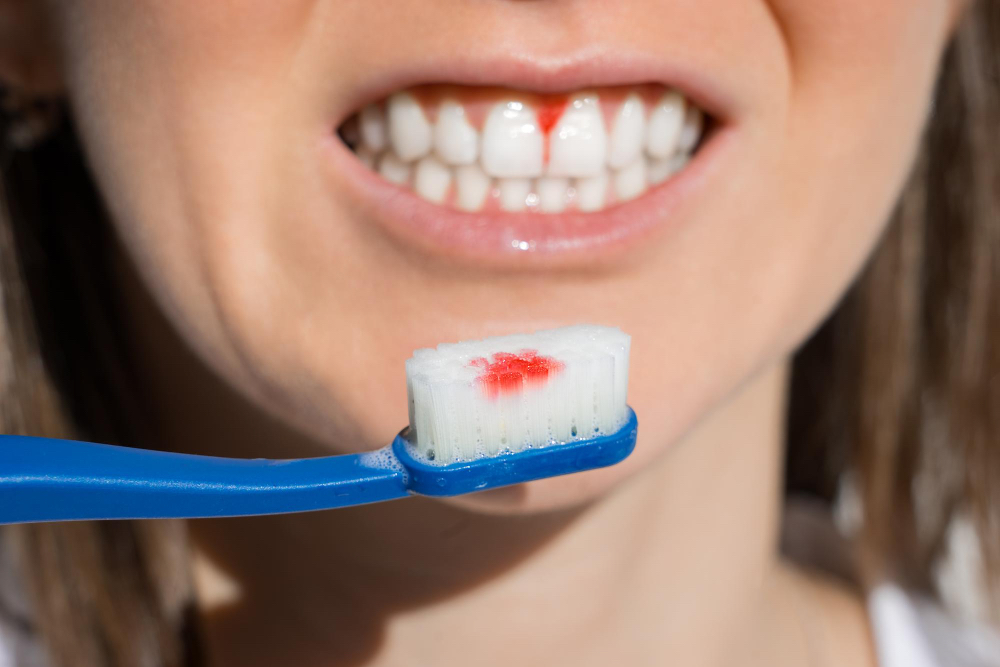
Why gums bleed when you brush, what you can do at home, how long it takes to settle, and when a cleaning helps. Prices for Kondapur and Vizag.