Dental Implants Cost in Visakhapatnam: A Guide From 29 Years of Practice (2026)
Dr. Y. Rajesh Kumar on dental implant cost in Vizag: ₹35,000 to ₹88,000 per tooth with the crown, implant alone from ₹25,000, six implant systems compared.
Read More


Most people walk into a dental chair assuming the diagnosis they are about to hear is a fact. Like a blood report. One number, one right answer, no argument.
It usually isn't.
A lot of dentistry is a judgment call made under uncertainty. Two careful, well-trained dentists can look at the same tooth, the same X-ray, and land in genuinely different places on what to do next. Not because one is lying. Because reading a small shadow on a film and deciding whether it needs drilling today or watching for a year is interpretation, not measurement.
That gap, between what is certain and what is a judgment, is the single most important thing nobody explains to you. And it is exactly where treatment you never needed tends to hide.
The whole way we work at Smile Dental is built around that one fact. So this page is not a list of values. It is the actual method. What we do, in what order, and why.
It means the scan, the X-ray, and a photo of your own tooth go up on the screen in front of you, and we walk you through what we are looking at before we name a single treatment. You see the evidence first. The recommendation comes second, with reasons attached.
Think about how most consultations run. You sit down, someone looks in your mouth for ninety seconds, and you are told you need a crown. The conclusion arrives without the data. You are expected to trust the verdict and book the slot.
We do it the other way around. Here is the image. Here is the crack, or the dark patch, or the bone level we are worried about. Here is what it means and here is what it does not mean yet. By the time we say this is what we would do, you have already seen the thing we are reacting to with your own eyes.
This is slower. It is also the only honest version. You cannot really agree to treatment you were never shown the reason for. You can only comply with it.
Because not everything that shows up needs fixing. An early spot in the enamel that has not broken through. An old filling that looks dated but is still sealing fine. A slightly crowded tooth that is not harming anything. Treating these can cost you money and, worse, remove healthy tooth structure that never grows back. Often the correct clinical call is to watch it.
This is not a soft opinion. It is documented. A peer-reviewed study of private-practice dentists examined what actually pushes a clinic toward unnecessary work, and the drivers were uncomfortable and specific: fear of losing the patient, financial pressure, misreading of X-rays, and plain diagnostic uncertainty. The same body of research lists the procedures most prone to it, things like replacing fillings that did not need replacing and bite splints fitted too quickly.
We say that out loud because naming the pressure is how you build a clinic that resists it. A practice that pretends overtreatment does not exist has no system to stop itself from doing it.
The clearest everyday example is the early enamel lesion, the faint white spot you sometimes see before a cavity forms. It is the stage where the surface has started to lose minerals but has not yet broken open. Drill it and you have made a permanent hole in order to treat something that fluoride, a change in brushing, and a little time can often reverse on their own. So we photograph it, mark exactly where it is, and check it at your next visit. A true cavity gets treated. A spot that can still heal gets watched. The difference between those two calls is worth more to you than any single filling.
Yes, and more often than patients expect. Dental research has shown for years that treatment recommendations vary between practitioners looking at identical cases. The variation comes from differences in training, the diagnostic tools each clinic uses, and the treatment philosophy a dentist was taught. Some lean toward watching and waiting. Others were trained to intervene early to head off any future problem.
Sit with what that means. The plan you are handed is shaped partly by who you happened to sit in front of. That is not a scandal. It is just how a field that runs on interpretation works. But it has one clear consequence for you: a second opinion is not an insult to your dentist. For anything major or expensive, it is responsible.
We tell patients this directly, and we mean it. Bring your scans, get another view, come back if you want to. A clinic that is confident the call was right has no reason to fear you checking it. The clinics you should be wary of are the ones that get defensive when you ask.
There is one more reason the judgment matters here more than in most of medicine. A lot of dental work is permanent. Prepare a tooth for a crown and you have shaped away enamel for good. That irreversibility is precisely why the decision deserves a second look before the drill starts, not after.
You talk first. We listen to what brought you in, what hurts, what you are worried about, what you have been told before. Then we scan and photograph. Then the images go on the screen and we explain what we see. Then we lay out your options, including the option to do nothing yet, with the honest cost of each. Then you decide. Nothing gets started the same day under pressure.
Five steps, and the order is deliberate.
Listening comes before looking because the thing that brought you in is often not the thing a scan would flag first, and we would rather treat the problem you actually have. The images come before any opinion so the opinion has to answer to the evidence. The options always include waiting, because if waiting is genuinely safe, hiding that from you would be dishonest. The costs come with the options, not after you have emotionally committed, so price is part of the decision instead of a surprise at reception.
And here is what those first few minutes of listening are actually for. Most of what matters is not on any scan. Someone mentions they have started chewing only on one side. Or that a tooth twinges on cold but settles in a second. Or that the clenching gets worse in a stressful month at work. Those details point you toward the real problem far faster than a film does. A scan shows you the what. The person in the chair, if you let them talk, usually hands you the why.
The no-pressure rule is also real. If a problem is urgent we will tell you it is urgent and explain why. If it is not, you are free to go home, think, talk to your family, and come back. Good dentistry survives a night's sleep.
Experience narrows the guessing. A dentist who has followed thousands of teeth across decades has watched which small problems stay small and which ones quietly turn into pain, infection, and a far bigger bill later. That pattern memory is what makes restraint safe. It is what lets a veteran watch one thing and act early on another, instead of treating everything the same way to be on the safe side.
Time also changes how you read a borderline case. Early in a career, uncertainty pushes you toward doing something, because doing something feels safer than watching and risking being wrong. After enough years of following the same kinds of teeth, you learn that many borderline findings simply stay stable, and that stepping in early often trades a small problem you could have monitored for a permanent change you cannot undo. Restraint is not timidity. It is a skill, and it takes decades to earn.
This is the part of our model that is hardest to copy. The clinic began in Visakhapatnam in 1997, and that long arc is not a line on a brochure. It is the reason a recommendation here is calibrated rather than cautious by default. Dr. Rajesh Kumar Y carries that clinical weight in Vizag, with an MDS in Orthodontics and a German fellowship in implantology behind decades of cases. Dr. Varsha Reddy leads the Kondapur clinic to the same standard, with an artist's eye for how a result actually looks on a real face. Two clinics, one method: show the evidence, explain the judgment, respect your right to decide.
A large chain is built around throughput. More chairs, more procedures, daily targets. None of that is hidden, and the pressure it creates runs in one direction, toward doing more, faster. Investigative reporting on corporate dental chains has documented exactly this tension between volume targets and what an individual patient needs.
Our model is single-clinic and doctor-led. There is no regional treatment quota sitting above the dentist. The only thing being measured is whether the call was right for you. That structural difference is the whole point, because a system's incentives shape its behaviour far more reliably than its intentions do. We would rather you walked out with no treatment booked than with one you did not need, and our model is built so that outcome costs no one anything.
Three questions sort most situations out, and you can use them in any clinic, not only ours.
First, can you show me the problem on the image? A sound recommendation can always be pointed to. If the answer stays vague, that is worth noting.
Second, what happens if I wait? Every honest plan has an answer to this, even if the answer is that it gets worse quickly and here is how we know. If waiting is dismissed without a reason, ask why.
Third, is this reversible? Anything that removes tooth structure or nerve tissue deserves a slower decision than something that does not. You are allowed to take that time.
None of these are aggressive. You are not accusing anyone. You are asking a professional to show their work, which is exactly what a confident one is happy to do.
You do not have to take any of this on faith. The approach is testable. Walk in, and you should see your own scans on the screen. You should hear the reasoning, not just the verdict. You should be told plainly when something can wait. And you should never feel rushed into starting the same afternoon.
If that is not what happens, hold us to it. That is the entire promise, and it is meant to be checked.
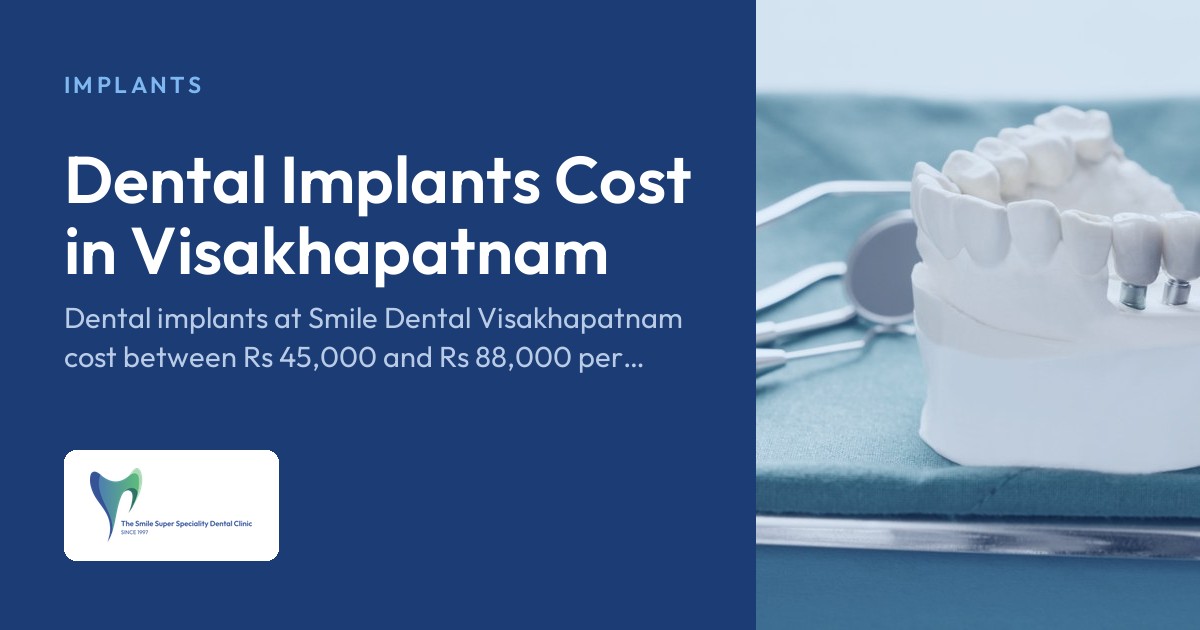
Dr. Y. Rajesh Kumar on dental implant cost in Vizag: ₹35,000 to ₹88,000 per tooth with the crown, implant alone from ₹25,000, six implant systems compared.
Holding a big dental quote and not sure about it? What to bring, what we check, and how a second opinion works at Smile Dental Kondapur and Vizag.