Implants have a marketing problem, and it works in the opposite direction to most. They are genuinely the best way we have to replace a missing tooth. The trouble is that being the best option in general has been turned into the right option for everyone, and those are not the same thing.
I have spent a large part of my career placing implants, including specialist training in implantology in Germany, and the most useful thing I can tell you is not how good they are. It is when they are not for you. Because an implant placed in the wrong mouth, or on a foundation that was never properly checked, is not a triumph. It is a problem waiting a few years to appear.
So here is the honest account. What an implant is, why it usually beats the alternatives, the people it is genuinely not right for, and the reason the price varies so much that you cannot compare two quotes on the headline number alone.
What is a dental implant, exactly?
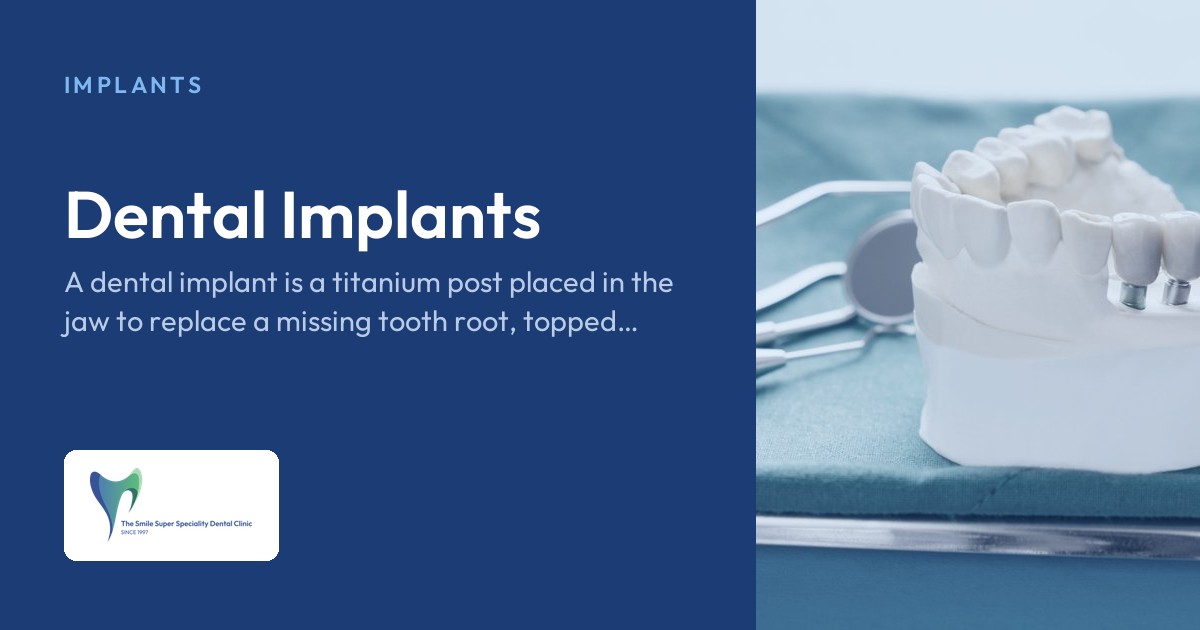
It is a small titanium post placed into the jawbone to act as an artificial tooth root, with a crown fixed on top of it. Two parts, doing the job of one whole tooth, root and all.
What makes it work is biology, not just engineering. Over a few months after it is placed, the bone grows onto and fuses with the surface of the post, a process called osseointegration. That fusion is what gives a finished implant the solidity of a natural tooth, something fixed in bone rather than resting on the gum. It is also why an implant is not a same week fix in most cases. The healing is doing the real work, and it cannot be rushed without raising the risk of failure.
Are implants really the best option to replace a missing tooth?
For most people with a healthy jaw, yes, and for clear reasons.
An implant replaces the root, not just the visible crown. That matters in two ways. First, it does not depend on the teeth either side, whereas a traditional bridge requires grinding down two healthy neighbouring teeth to anchor it, permanently. Second, the root part keeps stimulating the jawbone the way a natural root does, which slows the bone shrinkage that follows losing a tooth. And the longevity is real. Long term studies show roughly 95 percent of implants still functioning at ten years, with many lasting decades.
So as a general statement, the implant is usually the best replacement available. But a general statement is not a diagnosis, and the next section is the one that actually protects you.
When is an implant not the right choice?
When the foundation or the habits are not there to support it. This is the part the glossy version leaves out.
Several things genuinely raise the chance an implant fails, and the research is consistent on them. Heavy smoking is a major one, because it starves the healing tissues of blood supply. Uncontrolled diabetes slows healing and invites infection. Untreated gum disease means the same bacteria that destroy bone around natural teeth are waiting to do it around an implant. And simply not having enough bone left to hold the post securely is a common limiter.
In some of these situations the answer is to fix the problem first, stop smoking, get the diabetes controlled, treat the gum disease, rebuild the bone. In others, the honest answer is a different solution altogether. A bridge can be the better choice for some people. So can a denture. And sometimes, for a missing back tooth that is causing no functional or cosmetic problem, the right answer is to leave the gap alone rather than operate for the sake of it. A clinic that recommends implants to absolutely everyone who walks in is not assessing you. It is selling a product.
I talk people out of implants more often than they expect, and it is one of the more useful things I do. Someone arrives set on an implant for a tooth right at the back that no one can see and that their bite does not miss, and the straight advice is that the surgery, the cost, and the healing are not worth it for them. Other times a heavy smoker wants an implant and is not willing to pause even through the healing period, and I will not place one knowing the odds are stacked against it. Saying no to the wrong case is part of doing this work properly.
Can a dental implant fail or be lost?
Yes, and the way it happens surprises people, because it is not the failure they are bracing for.
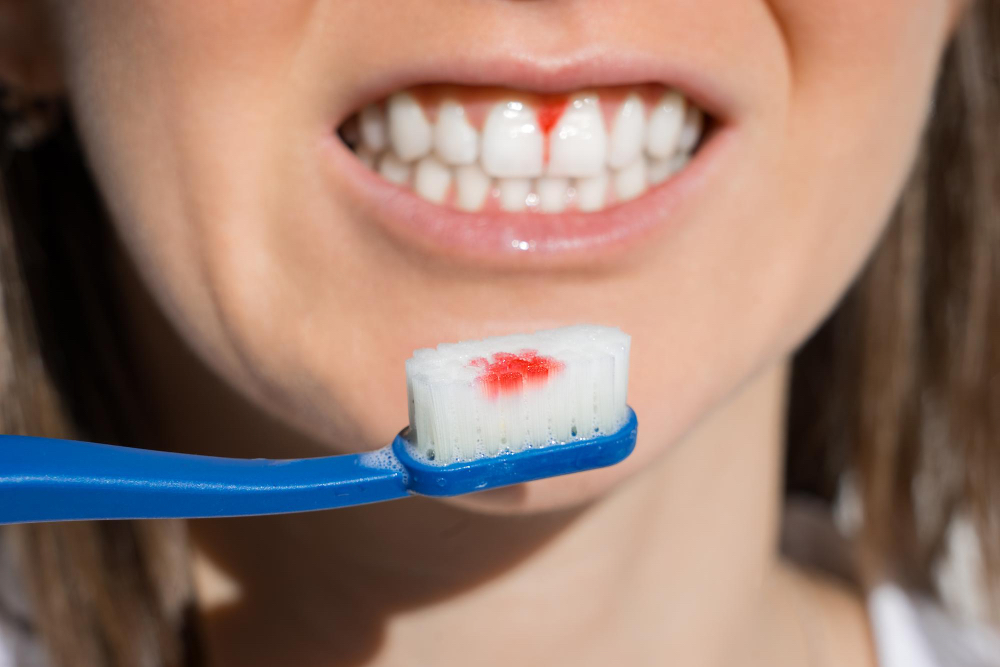
An implant cannot get a cavity, that much is true. But the gum and bone around it can still become infected and break down, a condition called peri-implantitis. It behaves much like gum disease around a natural tooth, quiet, inflammatory, destroying the support that holds the implant. Studies tracking implants over many years show this becoming more common the longer they are in place, and it is the leading reason implants are lost late rather than early.
The risk is higher in the same groups, smokers, diabetics, and people with a history of gum disease. Which leads to the single most misunderstood thing about implants. They are not fit and forget. They need the same daily cleaning and the same regular professional check ups as real teeth, arguably more attention, not less. An implant is a replacement tooth, not an exemption from looking after your mouth.
Why do implants need bone, and what is a bone graft?
An implant needs a certain amount of solid bone to hold it firmly, and that is not always there.
When a tooth has been missing for a while, the bone that used to surround its root shrinks, because nothing is stimulating it any more. By the time someone comes in considering an implant years after losing a tooth, there is often less bone than the site needs. A bone graft rebuilds that foundation, adding material the body integrates so there is enough solid base to anchor the implant safely.
Grafting is sometimes essential and sometimes not, and it is decided by looking, not guessing. We use a 3D scan of the jaw to measure the bone before anything is planned. The reason this matters to you beyond the clinical detail is simple. A graft adds time and cost, and it is one honest explanation for why one person's implant quote is far higher than another's. They may not be buying the same procedure at all.
Why do implant prices vary so much?
Because what sounds like a single procedure is often several, stacked together.
A single implant placed into good, healthy bone is a relatively straightforward case. The same patient who needs gum disease treated first, a bone graft to rebuild the site, or a sinus lift in the upper jaw is undergoing something considerably bigger, and the price reflects that real difference in work. On top of all of it, the crown that goes onto the implant is a separate component with its own cost.
So when you compare quotes, compare what is actually included, not the single number attached to the word implant. A low headline figure that quietly excludes the crown, or assumes no groundwork is needed, is not really the cheaper option. It is an incomplete one.
Is teeth in a day or all-on-4 real?
It is real, and it is also oversold, and both of those are true at once.
For the right patient, an entire arch of missing or failing teeth can be supported on four or more carefully placed implants, and in suitable cases a temporary fixed set of teeth can be fitted the same day. For someone who has struggled with loose dentures for years, it can genuinely change daily life. That part is not hype.
The part the advertising tends to skip is the conditions attached. It depends on having enough bone in the right places and on reasonable general health. The teeth fitted on the day are usually temporary, with the final set placed once everything has healed and settled. And it is not the right answer for every person shown the before and after photos. As with a single implant, it comes down to your scan and your health, assessed honestly, not to the strength of the marketing.
How do you decide if an implant is right for you?
We start with a 3D scan of the jaw, so we can see the actual bone rather than estimate it, and we check the health of your gums and your general health alongside it. Then you get a straight answer, whether an implant is the best option, whether you need groundwork such as gum treatment or a graft first, or whether a different solution genuinely suits you better.
You see the same scan we are reading. The plan is built around what will last in your mouth, not around what is most profitable to place. If an implant is right for you, it is an excellent, durable choice, and the specialist training behind it here is real. If it is not right for you, you will be told that plainly, which is exactly the point.
A missing tooth is worth replacing well, and for most people an implant is the most durable way to do it. The decision that matters is not whether implants are good. It is whether this one, in your mouth, on your foundation, is the right call. That is a conversation with the scan in front of you, and an honest one.